Second Year of Civic Education Programme for Statia’s Secondary School Students
Sint Eustatius, November 10, 2026 - The Island Council’s Registrar’s Office successfully conducted the second year of its Civic Education Programme for secondary school students on Sint Eustatius from November 2–5, 2026. The programme continues to strengthen students’ understanding of local government, democracy, and the importance of active citizenship.
Students from Forms 1 and 2 of the Gwendoline van Putten School participated in interactive sessions designed to encourage civic engagement, critical thinking, teamwork, and community involvement.
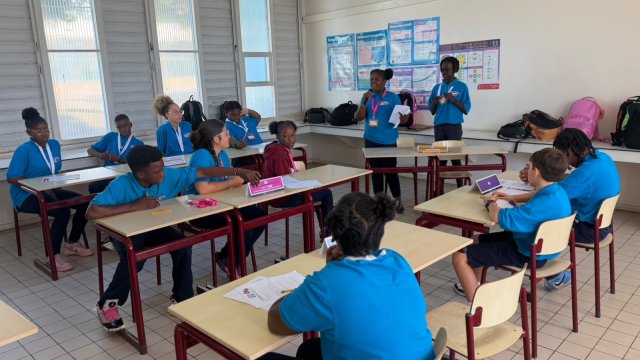
Form 1 – Introduction to Democratic Decision-Making
Through Democracy Game A, Form 1 students were introduced to the roles and responsibilities of Island Council members and Commissioners through a practical simulation centred on organising a youth festival.
During the exercise, the Commissioner presented a draft proposal requesting the Island Council’s support in planning the event. Students were divided into political factions, with each party tasked with developing its own position on how the festival should be organised.
Discussions focused on various aspects of the proposed event, including the date and time, entrance requirements, music restrictions, alcohol sales, work permits, and the overall experience for young people.
Students representing the Island Council were then challenged to develop counterproposals reflecting their respective parties’ priorities and vision for the festival.
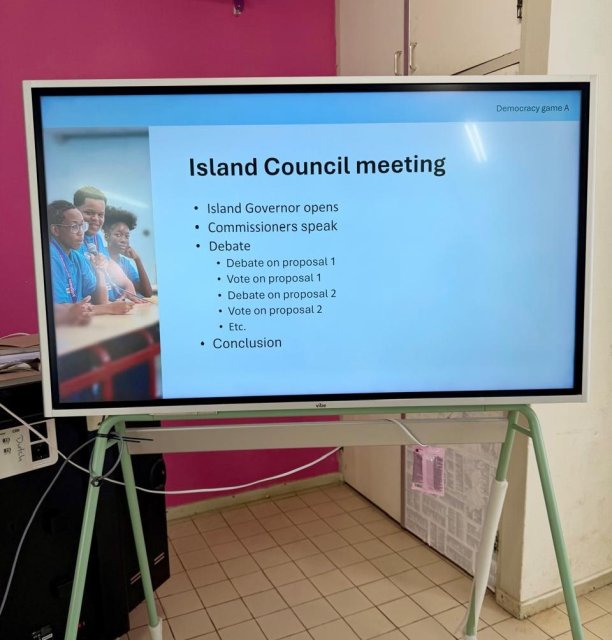
Once their proposals were finalised, students participated in a simulated Island Council meeting, where they presented their positions, engaged in debate, and voted on the proposals. This exercise provided students with firsthand experience of how decisions are discussed and made within the Island Council.
Form 2 – Strengthening Democratic Skills Through Debate and Negotiation
Students formed political factions within the Island Council and developed counterproposals in response to the Commissioner’s original plans for the youth festival. They were also encouraged to engage in discussions and negotiations with other political parties to understand their positions and identify opportunities for cooperation.
An important part of the exercise involved learning how to draft amendments to proposals and understanding the importance of securing a majority vote. Students were challenged to calculate how many additional votes their parties needed and determine which political factions they could approach to gain sufficient support for their proposals.
Students assigned the roles of Youth Commissioner and Events Commissioner were tasked with considering the Council’s proposals, preparing responses to amendments presented by the political parties, and anticipating questions that Council members might raise during the debate.
These activities allowed students to experience the importance of negotiation, strategic thinking, cooperation, and accountability in the democratic process.